

🌵Composition Rules Every Artist Should Know
Newsletter Edition: 85

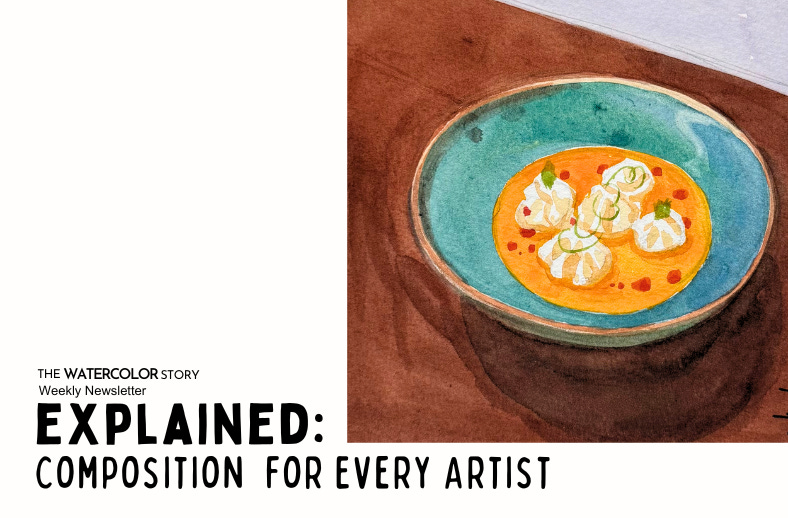
When I look at a painting or a photograph, the first thing I notice is how interesting the subject is. I think most of us do.
But there is also something else at work.
Something quieter.
Something more scientific.
It affects how long we look at an image and how it makes us feel.
Even we, as artists, can use it.
When you create a painting, you are doing more than just drawing an object.
You are also deciding where to place it on your paper.
That decision is called composition.
Think of composition like arranging things on a table.
When you move things around, the whole table feels different.
Artists and designers use different composition styles to help tell a story.
These are not strict rules.
They are helpful tools that guide your creativity.
Centered Composition
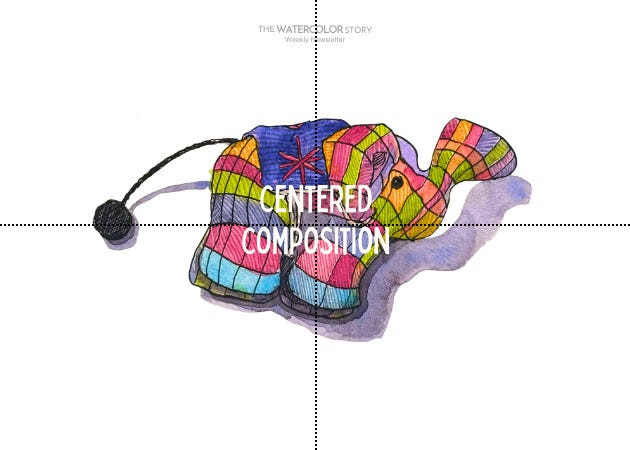
In this style, your main subject sits right in the middle of the paper.
It is like placing one cookie in the center of a plate.
Why use it
This works well when you want your subject to feel very important.
It also helps the viewer notice it immediately.
Examples
Flowers, cups, or a single piece of fruit often look strong when they are placed in the center.
Best for
This is the easiest style to try when you are just starting out.
It feels stable, calm, and safe.
The Rule of Thirds
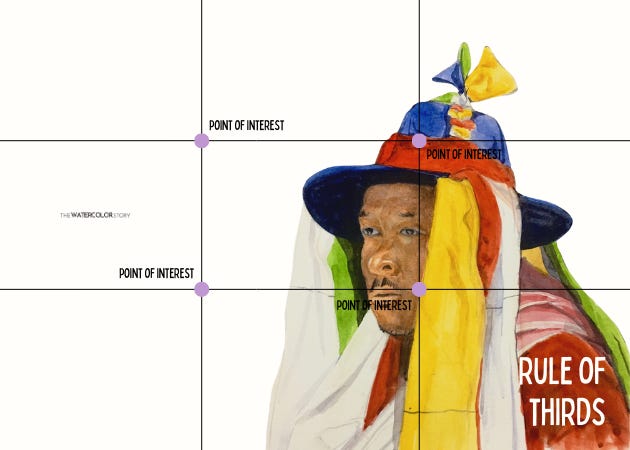
This is one of the most popular composition styles.
Imagine your paper looks like a tic tac toe board.
Two lines go up and down.
Two lines go left and right.
This creates nine equal boxes.
The idea
Instead of placing your subject exactly in the middle, try placing it near one of the lines or where the lines meet.
The result
This makes the painting feel more balanced and interesting to look at.
You do not need to draw these lines.
Just imagine them.
Asymmetrical Composition
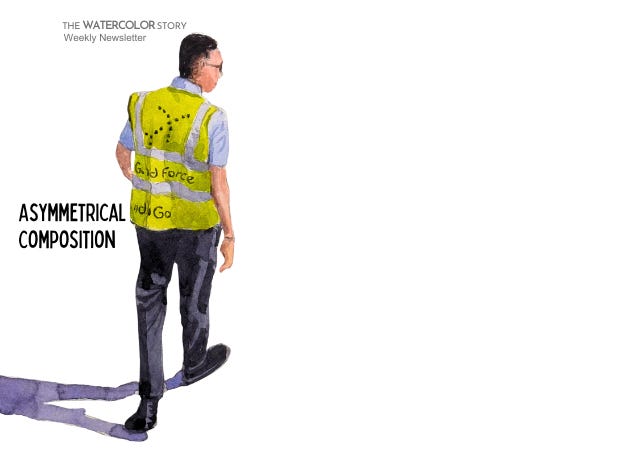
In this style, the subject is placed more on one side of the paper.
One side of the painting feels heavier.
The other side feels lighter.
Even though the sides are different, the whole painting still feels balanced.
This style feels natural and relaxed.
It is often used in modern paintings because it does not feel stiff.
Diagonal Composition
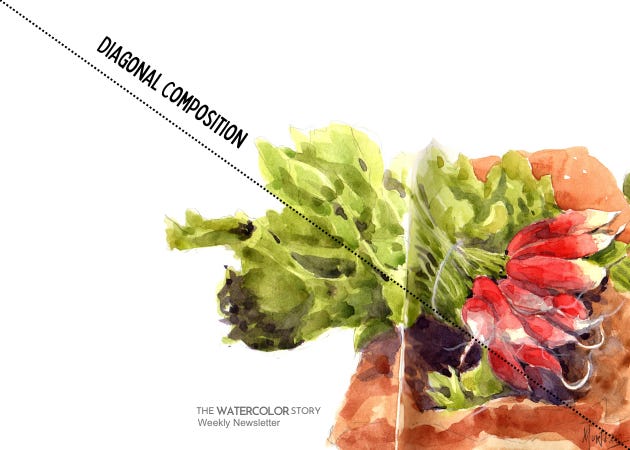
This style uses lines that move across the page from one corner to another.
How it looks
It could be a spoon lying across the paper.
It could be a shadow cutting through the scene.
The feeling
Diagonal lines make a painting feel active.
They add energy and movement.
Best for
This style works well when you want to show action, like running water or something in motion.
Framing Composition
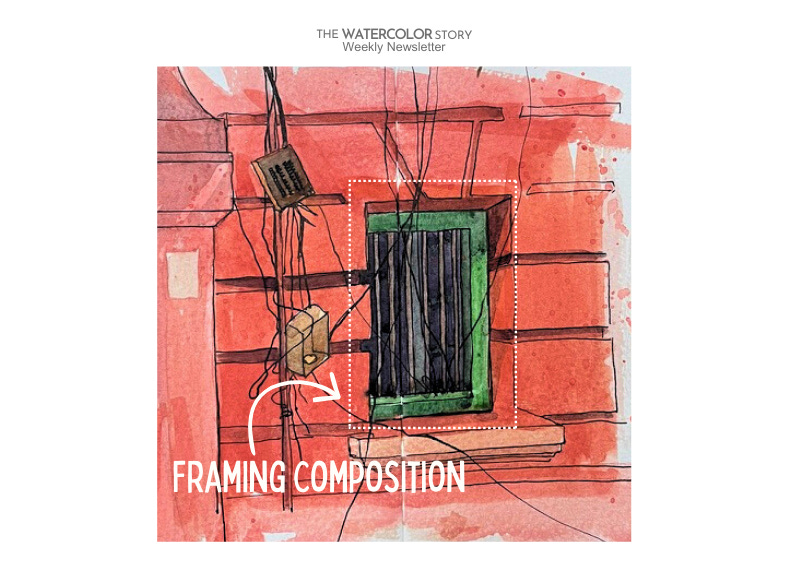
In this style, you use something inside the painting to frame your main subject.
The frame
This could be a window, a door, tree branches, leaves, or curtains.
The purpose
The frame helps guide the viewer’s eyes to what matters most.
The feeling
It feels like looking through a window into a small, special world.
Negative Space Composition
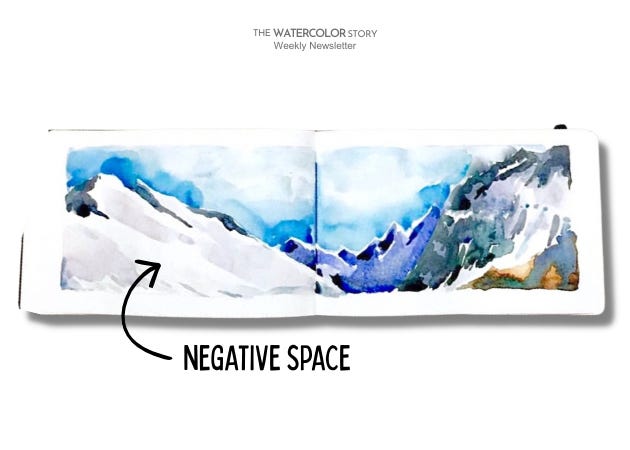
Negative space is the empty area around your subject.
In this style, the empty space is just as important as the object.
The look
The subject may be small.
The paper around it is mostly empty.
The result
This makes the subject stand out clearly.
It makes the painting feel calm and peaceful.
Remember
Empty space is never wasted space.
It gives the eyes room to rest.
How to Practice Composition
Composition becomes easier with practice.
A simple exercise is to paint the same object three times.
Paint it once in the center.
Paint it again using the rule of thirds.
Paint it one more time with lots of empty space.
You will notice something interesting.
The object stays the same.
But the feeling of the painting changes.
That is the power of composition.
END OF POST

Thank you for this post. So clearly and simply explained. ❤️